
Philosophy
Mechanism, not mystique
Ayurveda is a clinical system with a vocabulary. When the vocabulary is explained, the instructions stop sounding like folklore and start sounding like physiology.
The Framework
Not mystical. Precise.
Three functional principles govern every physiological process in the body. Naming yours is not a personality quiz — it is how a physician decides what oil, what hour, what food, what season.

Vata
वात
Air + Ether
Governs movement — breath, circulation, nerve impulse, elimination.
dry · light · cold
Pitta
पित्त
Fire + Water
Governs transformation — digestion, metabolism, body temperature, perception.
hot · sharp · oily
Kapha
कफ
Earth + Water
Governs structure — lubrication, immunity, tissue mass, steadiness.
heavy · slow · stable
Dinacharya
The day, as a rhythm
Ayurveda organises the twenty-four hours into dosha-governed windows. The protocol you are given is not a list of treatments — it is a placement of small acts at the hours your body is best equipped to receive them.
- 4:30 AMBrahma-muhurta wake
- 6:00 AMElimination & tongue scraping
- 7:00 AMAbhyanga — warm oil self-massage
- 8:00 AMPranayama & movement
- 12:00 PMMain meal, agni at its peak
- 4:00 PMLight activity, no heavy food
- 7:00 PMEarly, simple supper
- 9:00 PMWind-down, screens off, sleep
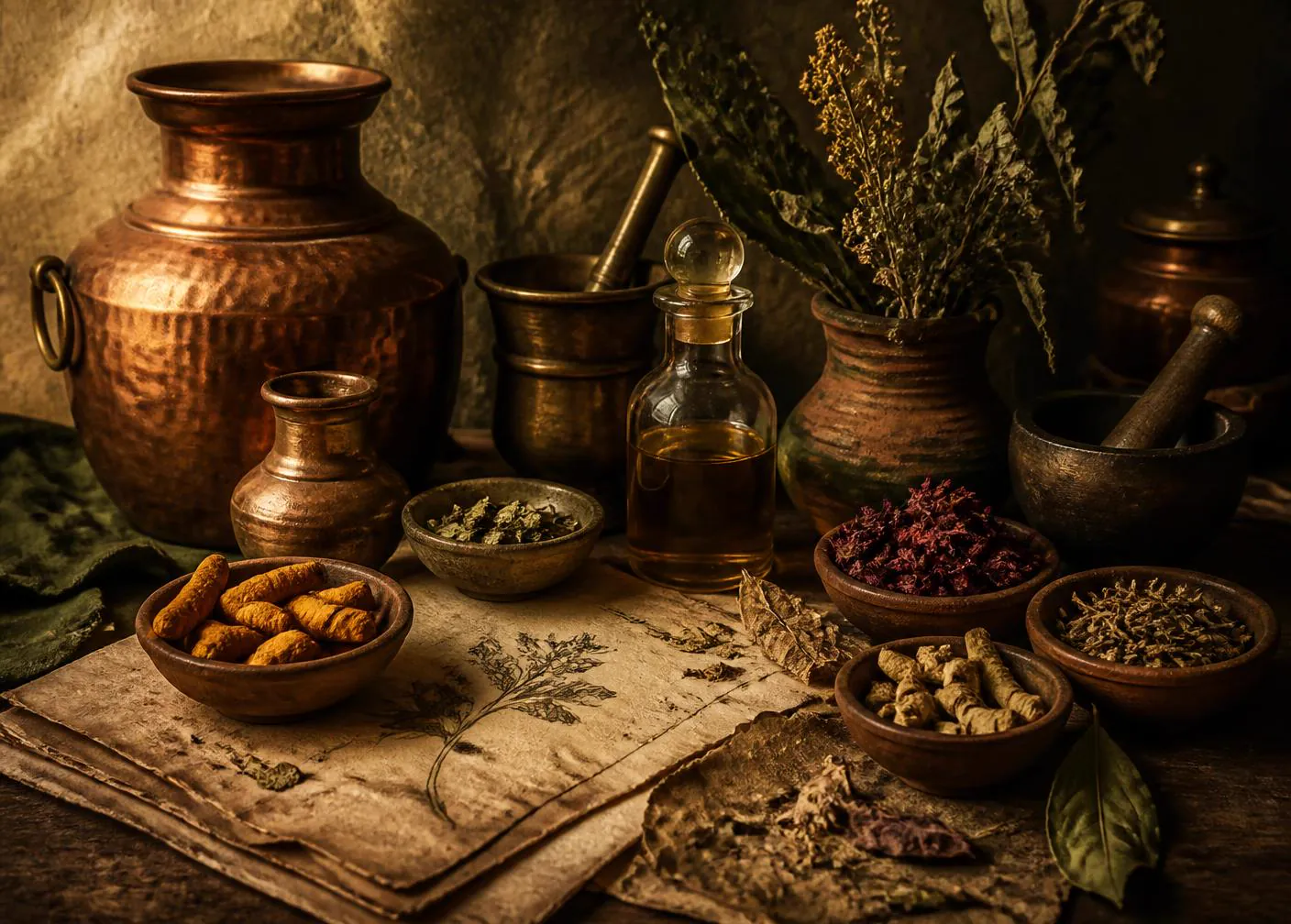
समदोषः समाग्निश्च समधातु मलक्रियः । प्रसन्नात्मेन्द्रियमनाः स्वस्थ इत्यभिधीयते ॥
samadoṣaḥ samāgniśca samadhātu malakriyaḥ · prasannātmendriyamanāḥ svastha ityabhidhīyate
Panchakarma
The five actions
Over time, poor digestion, stress and irregular living produce Āma — undigested residue that lodges in the tissues and disturbs the doshas. Panchakarma is Ayurveda's signature purification therapy: a supervised process that dislodges these toxins, expels them, and rebuilds the body anew.
Basti · Oil and decoction enemas that nourish the colon, joints, spine and nervous system. The classical texts call it half of all treatment.
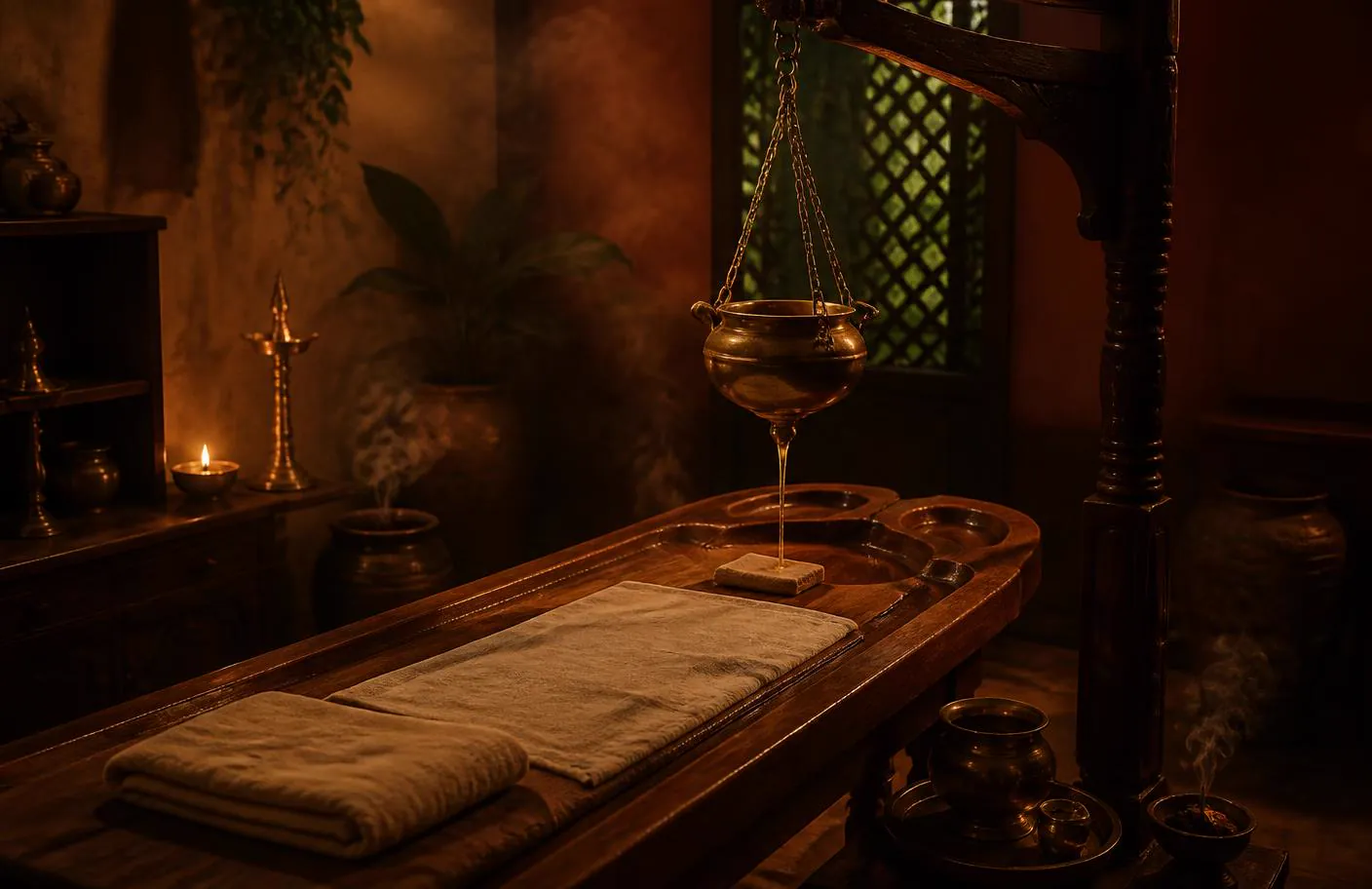
Panchakarma is bracketed by preparation (Pūrvakarma — oleation and sudation to loosen toxins) and after-care (Paścātkarma — a graduated diet to rekindle digestion). Together they clear deep-seated Āma, re-set the doshas, and strengthen Agni. It is always undertaken under expert supervision.
बस्तिरर्धचिकित्सा।
bastir ardha-cikitsā
Ritucharya
Living with the seasons
Ritu means season. What nourishes us in one may harm us in another. The Indian year moves through six seasons, gathered into two half-years: Ādāna kāla, when the sun's heat depletes our strength, and Visarga kāla, when the moon's cooling touch restores it.
शिशिर
Shishira
Late winter · Strong Agni, cold outside
- Favour
- Warm, unctuous, nourishing food; sweet, sour and salty tastes; ghee, milk, warm soups.
- Avoid
- Cold, dry, light foods; raw salads; excessive fasting.
Aahara
Food as medicine
Ayurveda does not count calories. It reads taste, quality and timing — because those are what Agni, the digestive fire, actually responds to. A complete meal carries all six tastes; each does a different job on the way through.
मधुर
SweetMadhura
Nourishes and builds tissue
अम्ल
SourAmla
Kindles appetite and digestion
लवण
SaltyLavana
Softens, moistens, loosens
कटु
PungentKatu
Stimulates and scrapes
तिक्त
BitterTikta
Cleanses and detoxifies
कषाय
AstringentKashaya
Tones and binds
Six habits that matter more than any single food
- 01Eat warm, freshly cooked food — it is easiest for Agni to digest.
- 02Make lunch the main meal; Agni is strongest when the sun is highest.
- 03Keep dinner light and early, ideally before sunset.
- 04Eat in proper measure — half the stomach food, a quarter liquid, a quarter left empty.
- 05Do not eat until the last meal has digested; food upon food breeds Āma.
- 06Eat seated, unhurried and without distraction.
आहारो महाभैषज्यमुच्यते।
āhāro mahā-bhaiṣajyam ucyate
Myths & Truths
What Ayurveda is not
Most objections to Ayurveda are objections to a caricature of it. Here are the six we hear most often, and what the texts and the clinic actually say.
TruthIt is a complete medical science with eight branches (Aṣṭānga Ayurveda) — including surgery. Sushruta described hundreds of surgical procedures and instruments over two millennia ago, earning the title father of surgery.